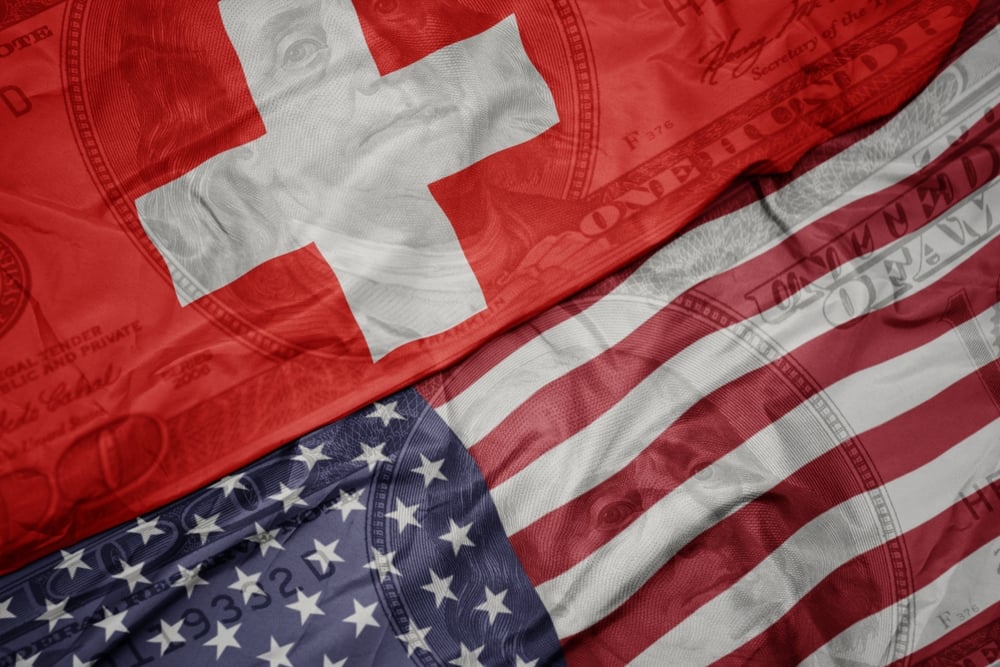
The United States and Switzerland are reportedly close to finalizing a trade agreement that would reduce the 39% tariffs imposed by President Donald Trump in August. The potential deal, which could lower duties on Swiss exports to 15%, aims to ease tensions that have strained one of Europe’s strongest economic partnerships.
Speaking from the Oval Office on Monday, President Trump confirmed that the White House is “working on a deal to get the tariffs a little lower.” He added, “I haven’t set any number, but we’re going to be working on something to help Switzerland. We hit Switzerland very hard. But we want Switzerland to remain successful.”
Negotiations point to a 15% tariff rate
According to multiple media reports citing sources familiar with the talks, the proposed agreement would align Swiss tariffs with those applied to European Union exports to the U.S. Bloomberg reported that negotiations are progressing quickly and that a deal could be finalized within weeks.
When asked for comment, a spokesperson for Switzerland’s Ministry of Economy told CNBC that the government would not discuss ongoing talks but confirmed that Swiss Economy Minister Guy Parmelin “is in regular contact with the relevant authorities in the U.S., including USTR Jamieson Greer.” The White House has not yet issued an official response.
The U.S. tariffs—one of the steepest measures imposed under Trump’s global trade strategy—were originally introduced to address what the administration described as “imbalanced” trade relationships. The duties targeted several countries, including Switzerland, whose exports span luxury goods, precision machinery, and pharmaceuticals.
Economic impact on Swiss exports
The 39% tariff sparked alarm in Switzerland, where exports of watches, jewelry, chocolate, chemicals, and industrial equipment are central to the national economy. Major companies such as Swatch Group and Richemont saw their shares dip after the duties were announced, but both traded higher on Tuesday following reports of progress toward an agreement.
Swiss business leaders have been outspoken about the damage caused by the tariffs. The CEO of Breitling, a leading luxury watchmaker, told CNBC that the duty was “horrible” for the country’s export-driven industries. Analysts warned that prolonged trade restrictions could hurt Switzerland’s manufacturing competitiveness and slow its economic growth.
Trade balance and political context
The tariffs were part of a wider campaign by Trump to address U.S. trade deficits with key partners. According to the Office of the United States Trade Representative, the U.S. recorded a $38.5 billion goods trade deficit with Switzerland last year. However, Swiss officials disputed the characterization of the imbalance, describing the trade relationship as “relatively balanced.”
“The U.S. has a surplus of services exports and Switzerland does for goods exports,” the Swiss government said in August. It added that its goods surplus is not based on unfair practices and that over 99% of U.S. products enter Switzerland tariff-free.
Economists note that both sides have strong incentives to reach a deal. For Switzerland, reduced tariffs would protect vital industries and restore investor confidence. For the U.S., easing restrictions could help stabilize transatlantic trade and reaffirm relations with a close ally whose economy complements America’s high-tech and service sectors.
Outlook for resolution
Although no official timeline has been set, observers expect the two countries to finalize a revised tariff structure soon. If successful, the agreement would bring relief to exporters and signal a broader shift in U.S. trade policy toward its European partners. The deal could also serve as a model for renegotiations with other nations affected by recent tariff increases.
Market reaction has been cautiously optimistic, with investors expecting that an easing of trade tensions could benefit both economies. For now, attention remains on Washington and Bern as negotiations enter their final stages.