Resignation jolts investors despite board and regulator reassurances
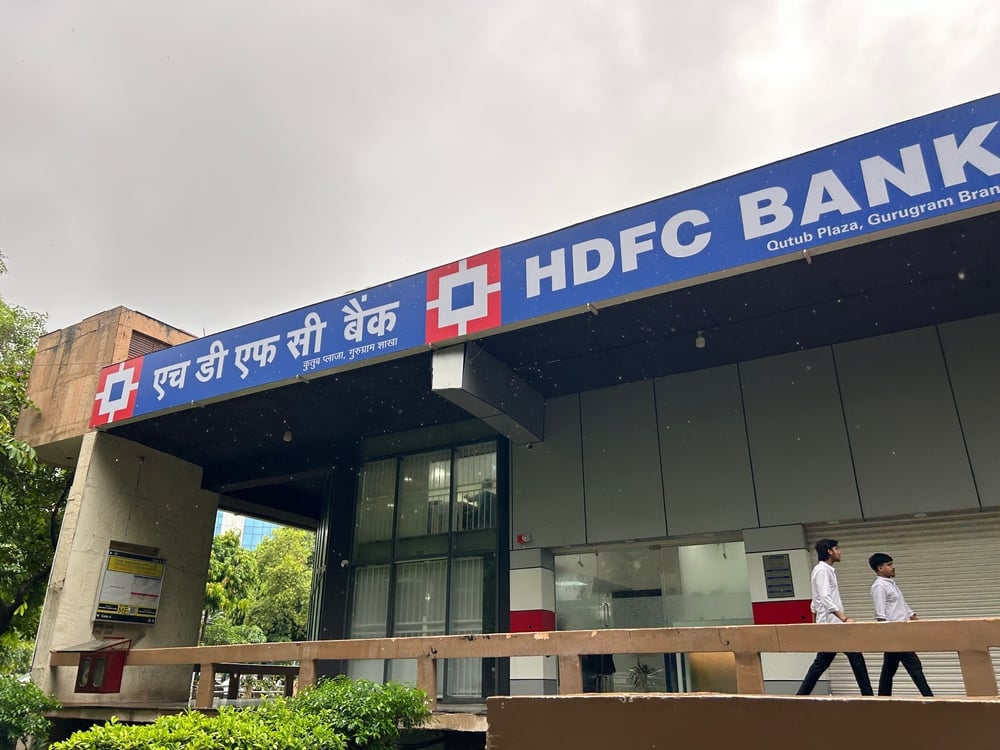
HDFC Bank shares fell sharply on Thursday after the resignation of part-time chairman Atanu Chakraborty triggered fresh questions about governance at India’s largest private-sector lender. The stock closed down 5.11 percent as investors reacted to his departure and to the unusual language in his resignation letter, which pointed to ethical concerns inside the institution.
The sell-off reflected how sensitive markets remain to any suggestion of governance strain at a major financial institution, particularly one with a large foreign shareholder base and a central role in India’s banking system. Chakraborty said that certain developments and practices he had observed over the past two years were not aligned with his personal values and ethics, giving the issue a broader significance than a routine boardroom change.
The timing added to the market impact. The resignation was submitted late on Wednesday, leaving investors to digest the news when trading opened on Thursday. In a bank of HDFC’s size and profile, even a brief hint of internal discord is enough to unsettle sentiment, especially when the concerns are framed in moral rather than purely managerial terms.
Board moves quickly to contain fears of internal rift
HDFC Bank’s immediate response was aimed at limiting the damage and projecting continuity. During an investor call, interim part-time chairman Keki Mistry said Chakraborty had not provided the board with any evidence or detailed explanation to support the allegations of unethical practices. He also rejected the idea of a divided leadership team, insisting that management remained cohesive and would continue to function that way.
That defense was clearly intended to reassure investors that the resignation did not point to a deeper operational or strategic fracture. In situations like this, markets tend to focus not only on the accusation itself, but also on whether the board appears organized, transparent and in control. Mistry’s appointment and his public effort to calm concerns suggest the bank understood that the issue had to be contained quickly before it evolved into a broader confidence problem.
Still, the market reaction showed that reassurance alone was not enough to eliminate concern. Investors were not simply evaluating whether the bank denied the allegations. They were also reacting to the fact that a senior figure had felt compelled to leave while citing values and ethics, language that inevitably raises questions even when no supporting evidence is publicly produced.
Regulator backs the bank, but investors stay cautious
India’s central bank sought to steady the situation by saying HDFC Bank remains financially sound and is overseen by a professional board and competent management. The Reserve Bank of India also said that its periodic assessments had not identified any material concerns regarding the bank’s conduct or governance. That intervention was important because it signaled that, at least from the regulator’s perspective, the institution is not under visible supervisory stress.
Even so, regulatory reassurance does not always stop immediate market weakness. Governance concerns are often treated differently from credit or capital issues because they can create uncertainty before any formal finding is made. In this case, the gap between the chairman’s resignation language and the regulator’s supportive stance leaves investors with an unresolved tension: the official system says there is no material issue on record, yet a senior insider has stepped down citing concerns serious enough to distance himself from the organization.
That ambiguity is likely to keep the issue alive in the short term, particularly among institutional investors that place high value on governance quality and board stability when assessing banking stocks.
Foreign investors and market stature raise the stakes
The episode matters more because of HDFC Bank’s scale and ownership structure. Foreign institutional investors hold more than 47 percent of the lender, with major long-term holders including the Government of Singapore and Norway’s sovereign wealth fund. That level of international ownership means any governance-related shock can quickly draw global attention and amplify pressure on the share price.
As of Wednesday, HDFC Bank’s market capitalization stood at 13.08 trillion rupees, comfortably above the 9.95 trillion-rupee valuation of State Bank of India, the country’s largest public-sector lender. That premium reflects years of market confidence in HDFC’s franchise, profitability and management standards. It also means the bank has more reputational capital at risk when questions arise around leadership culture or governance practices.
Some market observers have already warned that the stock could remain under pressure until the concerns are more clearly addressed. That does not necessarily mean the bank faces a deeper institutional crisis. But it does mean investors are unlikely to rush back in until they feel the board has either clarified the issue more convincingly or demonstrated that the resignation was an isolated matter rather than the sign of something broader. For now, the market is treating the event as a governance shock first and a valuation question second, which is why the response has been swift and sharp.