Bailey Warns of Economic Slack and Job Market Weakness
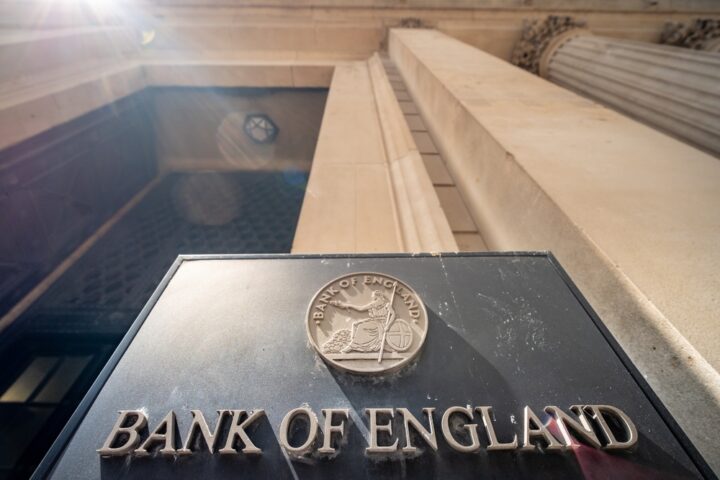
The British pound fell to a three-week low after Bank of England Governor Andrew Bailey indicated the central bank may accelerate interest rate cuts if labor market conditions deteriorate. Speaking to the Times, Bailey said “slack” was emerging in the UK economy, driven in part by recent tax hikes that have squeezed employers and dampened hiring activity.
“I really do believe the path is downward” for rates, Bailey said. The bank rate currently stands at 4.25%, following four quarter-point cuts over the past year. The next rate decision is scheduled for August 7, and investors are increasingly convinced a cut is coming. Money markets now price in an 85% probability of a rate reduction, up from 76% last week.
Markets React as Pound Hits Three-Week Low
The pound dropped 0.2% on Monday morning, reaching $1.3467 — its lowest level since June 23. It recovered slightly by afternoon, trading down 0.18% at $1.3474. Bailey’s comments added momentum to expectations of further monetary easing, even as inflation remains above target. UK inflation slowed slightly in May to 3.4% from 3.5% in April, still well above the Bank’s 2% goal.
Bailey defended the rate cut trajectory, citing growing economic slack. “If we saw the slack opening up much more quickly, that would lead us to a different conclusion,” he said, referring to a more aggressive easing path. Despite concerns over inflation, Bailey stressed the importance of being “gradual and careful” in policy decisions.
Tax Burden Pressures Employers and Growth
The governor highlighted the impact of Chancellor Rachel Reeves’s fiscal policies on employment trends. In April, businesses were hit with a £25 billion increase in employer national insurance contributions, as well as a 6.7% rise in the national living wage. Bailey noted that companies have responded by reducing hours, slowing pay growth, and adjusting staffing levels.
Reeves’s tax increases, introduced in last October’s budget, were part of an effort to narrow a projected fiscal gap. However, downgraded growth forecasts and high borrowing costs have limited her flexibility. Recent U-turns on disability benefits and winter fuel allowances, combined with weaker-than-expected economic data, have raised expectations for further tax hikes in the autumn budget.
Hiring Slows Sharply as Economy Contracts
New data from KPMG and the Recruitment and Employment Confederation shows that UK business hiring fell at its fastest pace in nearly two years. Their hiring index of staff availability rose to 66.1 in June, up from 63.3 in May — the highest reading since November 2020, signaling a weakening labor market.
Official figures also revealed a 0.1% contraction in GDP in May, following a 0.3% decline in April. These back-to-back monthly declines have raised concerns about stagnation and reinforce the Bank of England’s cautious outlook. With pressure mounting on the government to improve living standards, Bailey’s signal of easier monetary policy may offer some relief — but it also underscores the fragility of the UK’s economic recovery.
Governor Bailey’s remarks suggest the Bank of England is prepared to cut rates more aggressively if the job market weakens further. While carveouts in fiscal policy continue to evolve, slowing growth, falling hiring, and persistently high inflation are converging to push the UK toward a more accommodative monetary stance. Markets, employers, and policymakers are bracing for a volatile second half of 2025.