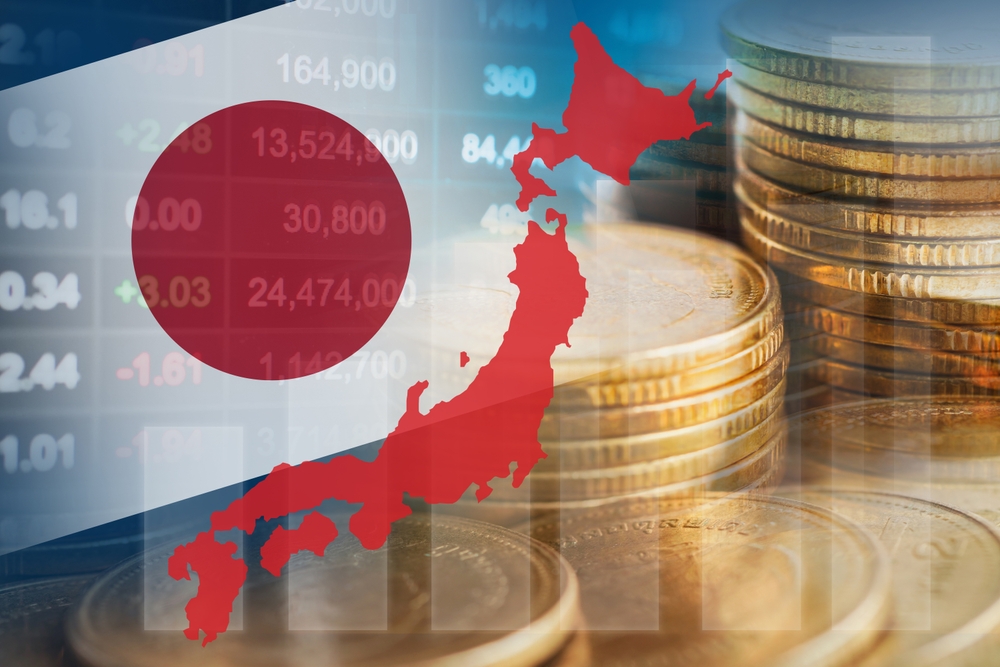
Japan’s economy contracted less than initially estimated in the January-March quarter, according to revised government data released on Monday. While private consumption was revised upwards, the outlook remains clouded by the uncertainty surrounding U.S. tariffs.
Revised Economic Data
Gross Domestic Product (GDP) shrank by an annualized 0.2% in the first quarter, better than the earlier estimate of a 0.7% contraction. The revision translates to a flat growth rate in price-adjusted terms compared to the initial forecast of a 0.2% contraction. However, analysts remain concerned that economic growth was losing momentum even before the U.S. President Donald Trump’s implementation of reciprocal tariffs on April 2.
Private Consumption and Capital Expenditure
Private consumption, which accounts for more than half of Japan’s economy, saw a small increase of 0.1%, compared to no growth in the initial reading. This revision was attributed to the inclusion of sales data from restaurants and gaming, which had not been available previously. On the other hand, capital expenditure, a key indicator of private sector strength, grew 1.1%, slightly lower than the initial reading of 1.4%.
Concerns Over External and Domestic Demand
External demand, represented by exports minus imports, continued to drag on growth, subtracting 0.8 percentage points from GDP, while domestic demand contributed positively with 0.8 percentage points. Despite some positive revisions, concerns about U.S. tariffs, especially in the automotive sector, loom large over Japan’s economic future.
Tariff Uncertainty and Policy Outlook
Japan faces a potential 24% U.S. tariff starting in July unless it can negotiate a lower rate. The Japanese government is particularly concerned about the impact of tariffs on its automotive industry, which constitutes a significant portion of the country’s exports. Economists like Kazutaka Maeda of Meiji Yasuda Research Institute have raised concerns about the difficulty of negotiations, given the size of the automotive sector in Japan.
Impact on Bank of Japan’s Monetary Policy
The ongoing trade tensions, exacerbated by U.S. tariffs, are also creating uncertainty for the Bank of Japan (BOJ). Policymakers are concerned that these issues may hinder the BOJ’s efforts to normalize monetary policy. With a two-day policy meeting set for early next week, the BOJ is expected to closely monitor both economic data and the progress of tariff negotiations before making any policy decisions.
Conclusion
The revised data shows Japan’s economy is under pressure but not as severely as initially feared. However, ongoing trade tensions and tariff negotiations remain a significant source of concern, and the impact on both exports and domestic demand will likely influence the BOJ’s upcoming decisions.