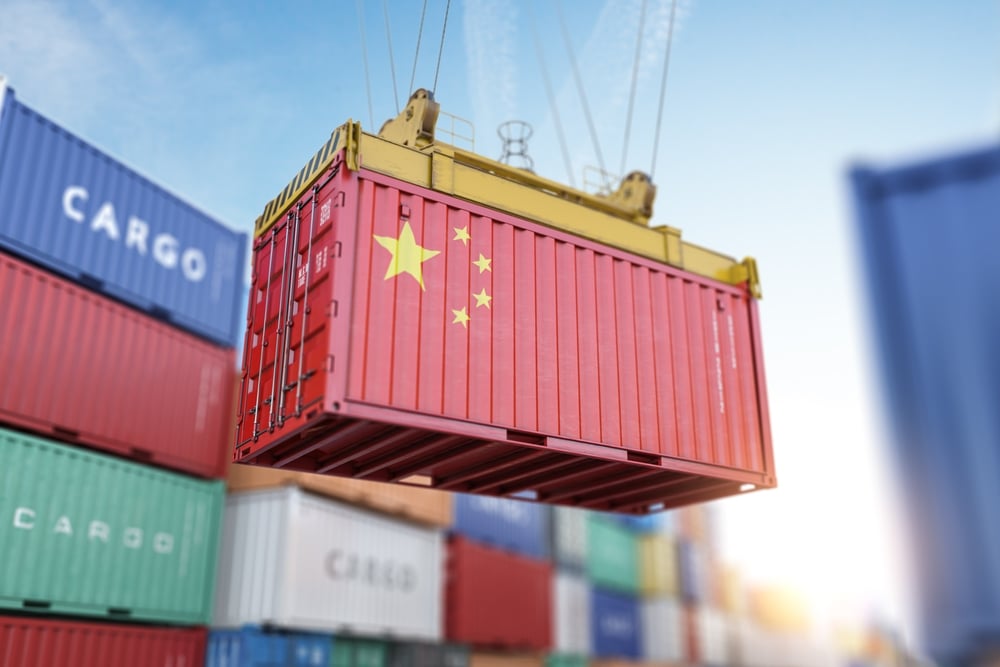
Export momentum shifts away from the United States
China has pushed its annual trade surplus over the one trillion dollar mark for the first time, driven by strong exports to Europe, Australia and Southeast Asia. Companies have redirected shipments to markets with lower tariff barriers as U.S. trade pressure remains high.
Sales to the United States dropped sharply, nearly one third year over year in November, but the stronger performance elsewhere more than compensated, reflecting China’s effort to diversify global demand.
Exports rebound while imports show modest strength
Customs data showed a 5.9 percent rise in exports in November compared with last year, reversing the previous month’s contraction and exceeding expectations from economists. Imports increased 1.9 percent, signaling gradual improvement in domestic and external purchasing activity.
China recorded a trade surplus of 111.68 billion dollars for the month, the highest since June and above analyst forecasts. The stronger figures helped support the yuan as markets look ahead to key policy signals.
Tariffs continue to weigh on U.S. trade flows
Despite recent steps toward tariff reductions between the world’s two largest economies, China’s access to the U.S. market remains restricted. Average U.S. duties on Chinese goods hold near 47.5 percent, a level that erodes margins and encourages firms to build supply chains elsewhere.
Economists warn that weakened U.S. demand leaves exporters exposed to ongoing uncertainty, even as orders from other regions provide relief. Recent manufacturing surveys suggest that international trade conditions remain challenging for factory owners.
Domestic weaknesses shape economic priorities
With property activity still subdued, China faces slower internal demand for materials like copper, highlighting structural pressures in the economy. Authorities have pledged measures to boost consumption as a long-term growth engine, aiming to reduce reliance on global markets.
Upcoming government conferences are expected to define next year’s economic agenda, including strategies to stabilize recovery and safeguard competitiveness in the face of shifting trade relationships.