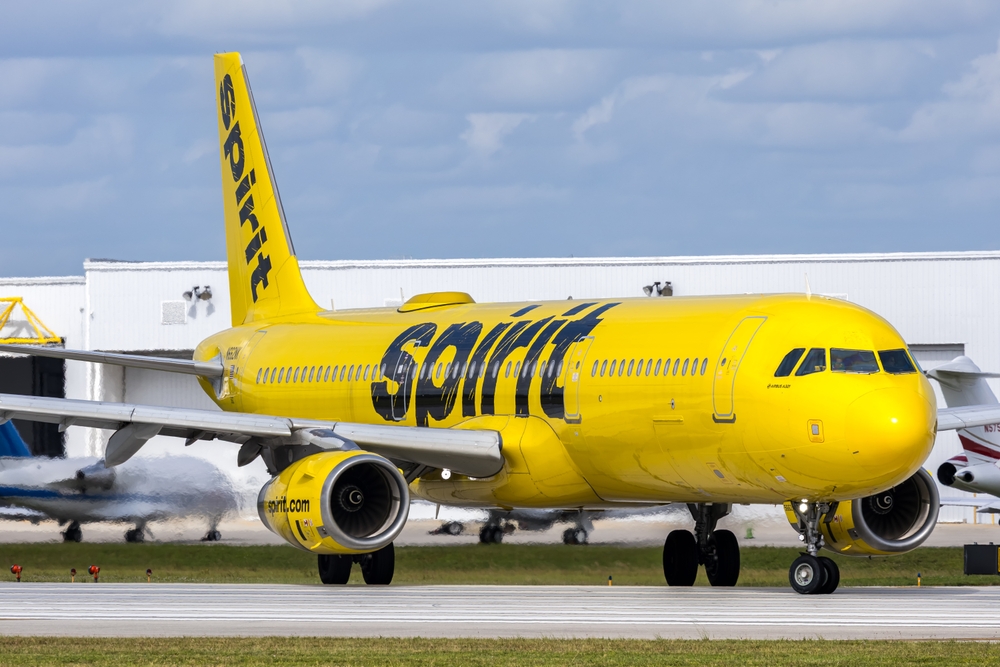
Spirit Airlines is once again confronting the possibility that its recovery may not hold. After struggling through a second bankruptcy in less than a year, the ultra-low-cost carrier is now facing renewed concern that it could be pushed toward liquidation if worsening fuel costs and competitive pressure continue to erode its already fragile financial position.
The immediate trigger is the sharp rise in jet fuel prices, which has hit the airline at one of the worst possible moments. Spirit was already trying to stabilize its business through a smaller fleet, a tighter route network and a more selective strategy focused on periods of stronger travel demand. That plan now looks far harder to execute if fuel remains elevated, because the company has very little room to absorb another major cost shock.
This is what makes the latest reports so serious. Spirit is not facing an ordinary rough patch. It is dealing with a fresh external shock while still trying to recover from a restructuring that had not yet fully restored confidence in the business.
Fuel Prices Are Hitting Spirit Especially Hard
For airlines, fuel is one of the largest costs after labor. For Spirit, that burden is even more damaging because its business model depends on offering very low fares in a market where customers are extremely price sensitive. Larger airlines can offset cost pressure more easily through premium cabins, loyalty programs and broader international exposure. Spirit does not have the same buffers.
That difference matters. When fuel jumps sharply, Spirit cannot simply pass the increase straight on to customers without risking further pressure on demand. The result is a much harsher squeeze on margins than what stronger carriers usually face.
This is why the current energy shock is so dangerous for the airline. A cost increase that might be painful but manageable elsewhere can become existential much more quickly for Spirit.
The Company Was Already On Shaky Ground
Even before fuel prices surged, Spirit was not operating from a position of strength. The airline had already filed for bankruptcy twice in a short period and was still trying to prove that its latest restructuring plan could work. Pilot and flight attendant unions had made concessions, and management had aimed to shrink the business and concentrate on more attractive routes and travel periods.
That plan depended on a relatively stable cost environment and enough liquidity to keep the company moving toward a cleaner exit from bankruptcy. But Spirit’s financial cushion was already thin. A fresh surge in operating costs now threatens to overwhelm assumptions that were central to its turnaround effort.
In other words, the airline did not need another headwind. It got one anyway, and it may be the most punishing one yet.
Competition Has Become Even Less Forgiving
Spirit’s difficulties are also being intensified by the behavior of competitors. As its future has looked more uncertain, rival carriers have moved to strengthen their presence on overlapping routes. That makes Spirit’s situation harder because it must fight for passengers at the same time that it is trying to defend cash and restructure operations.
For a budget airline, competition is already intense under normal conditions. When rivals add flights to your markets while your own balance sheet is under stress, the pressure becomes even more severe. Spirit is therefore being squeezed from both sides at once: higher costs internally and more aggressive competition externally.
This combination is one reason why liquidation fears have become more plausible now than they might have seemed only a few months ago.
The Business Model Has Been Under Pressure For Years
Spirit’s problems did not begin with this latest fuel shock. The airline had already been weakened by a series of structural challenges that have made life much harder for ultra-low-cost carriers since the pandemic. Labor costs rose, customer preferences shifted and an oversupplied domestic market pushed fares lower, especially for airlines focused almost entirely on U.S. leisure travel.
At the same time, Spirit lacked the premium and loyalty-driven revenue streams that helped larger carriers weather these changes more effectively. It also suffered from the Pratt & Whitney engine recall, which grounded aircraft and disrupted operations at a time when stability was badly needed.
The blocked JetBlue takeover then removed what might have been a more transformative escape route, leaving Spirit to continue alone in a far less forgiving market.
A Liquidation Would Mark A Dramatic Fall
That is what makes the current moment so striking. Spirit was once one of the most profitable airlines in the industry, with margins that many rivals envied. Its stripped-down model and aggressive pricing made it a powerful disruptor in U.S. air travel. But the environment that once rewarded that model has changed sharply.
Now the airline is trying to survive in a market shaped by higher costs, tougher competition and travelers who are increasingly drawn to carriers that can offer more comfort, more flexibility or stronger rewards. Spirit has tried to adapt by offering bundled fares and roomier seats, but those changes have not been enough to remove the deeper strain on the business.
If liquidation does happen, it would not simply be the failure of one troubled company. It would also reflect how much harder the economics of the U.S. airline industry have become for smaller, lower-cost operators.
The Outcome Is Still Uncertain, But The Risk Is Real
It is still not clear whether Spirit will in fact begin liquidation or whether another last-minute path will emerge. The airline itself has declined to comment on market speculation, and the exact timing or likelihood of any final decision remains uncertain.
But uncertainty does not mean the danger is exaggerated. On the contrary, the fact that liquidation is being discussed so seriously at this stage tells its own story. Spirit’s recovery plan has become much more vulnerable, and the company now appears to be operating with very little margin for another setback.
That leaves Spirit in a familiar but increasingly desperate position: still flying, still trying to hold on, but once again confronting the possibility that survival may depend less on strategy now than on whether conditions stop getting worse in time.