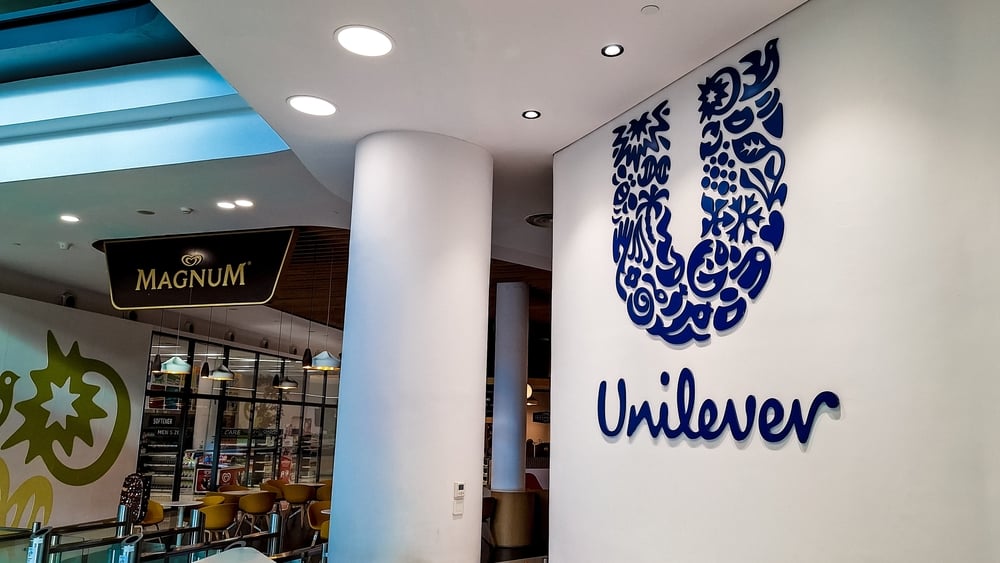
McCormick has agreed to buy most of Unilever’s food business in a transaction that values the unit at nearly $45 billion, marking one of the biggest reshaping moves in the packaged food industry in recent years. The deal would significantly expand McCormick’s reach beyond spices and sauces into a broader portfolio of condiments, spreads, soups, and seasonings, while giving Unilever more room to concentrate on faster growing areas of its business.
Under the agreement, McCormick will pay $15.7 billion in cash for the bulk of Unilever Foods, while Unilever shareholders will end up owning 55.1% of the combined company and Unilever itself will keep a 9.9% stake. That structure highlights why the transaction is being viewed ոչ only as an acquisition, but as a major realignment of ownership and strategy between two global consumer groups.
The combination would bring together some of the best known names in pantry staples. McCormick already owns brands such as Frank’s RedHot, Cholula, and French’s mustard and mayo. Unilever Foods adds major labels including Hellmann’s and Marmite, with roughly 70% of its sales coming from Hellmann’s and Knorr. If completed, the deal would create a much larger player across seasoning, sauces, and meal accompaniment categories at a time when big food companies are under pressure to simplify portfolios and protect growth.
A bigger push into condiments and staples
For McCormick, the transaction is a direct expansion into categories where household demand tends to be steady and brand strength matters. The company has long been associated with spices and flavor products, but this deal would deepen its presence in spreads, mayonnaise, stock cubes, soups, and related kitchen staples. That broader mix could give the company a more diversified revenue base and more cross category selling power across retail channels.
The scale of the added business is also meaningful. Unilever Foods would contribute billions of dollars in annual sales, bringing in brands with strong recognition in multiple markets. Hellmann’s remains one of the biggest names in mayonnaise, while Knorr holds a major position in seasonings and cooking products. Marmite, although more regionally concentrated, adds another distinctive brand with loyal demand.
McCormick Chief Executive Brendan Foley said the company had been thinking about a deal involving Unilever’s food business for a number of years. That suggests the move is not opportunistic, but part of a longer strategic effort to broaden the company’s footprint beyond its traditional core. Management is projecting sustainable organic sales growth of 3% to 5% after the merger, signaling confidence that the enlarged portfolio can deliver steady expansion rather than just scale for its own sake.
Unilever sharpens its focus on faster growth
For Unilever, the sale is another step in a broader portfolio redesign. The company has increasingly moved toward concentrating on higher growth and higher margin areas, especially personal care. By divesting most of its food business, Unilever is reducing exposure to slower growing packaged food categories and freeing up space to invest more heavily in segments where consumer demand has been more resilient.
The decision fits with actions the company has already taken. In December, Unilever separated its ice cream operations into a standalone business now trading as Magnum Ice Cream Co. The latest transaction continues that streamlining effort and further narrows the company’s strategic focus. Importantly, the deal does not include Unilever’s food business in India, indicating the company is still retaining selected operations it views differently from the rest of the portfolio.
Even after the transaction, Unilever will remain closely tied to the combined entity through its ownership structure. Unilever shareholders will control a majority of the new company, and Unilever will directly hold 9.9%. That means the group is not making a clean exit. Instead, it is exchanging direct operational exposure for a significant continuing interest in a larger combined food platform.
Ownership structure raises investor questions
Despite the strategic logic, investors reacted cautiously. McCormick shares fell 6% in morning trading, while Unilever’s stock dropped 4%, suggesting that the market is weighing the risks of size, complexity, and integration against the possible long term benefits. Large consumer mergers often promise scale and cost synergies, but history shows that execution can be uneven, especially when portfolios, geographies, and ownership structures become more complicated.
That caution is understandable given the design of the transaction. Although McCormick is the acquiring company, Unilever shareholders will own 55.1% of the combined group, which could complicate how investors think about control and strategic direction. When the deal closes, Unilever will appoint four of the 12 board members, and one of those directors will be a Unilever executive for the first two years. This arrangement may reassure Unilever stakeholders, but it also introduces governance questions that would not arise in a simpler all cash takeover.
Barclays analyst Andrew Lazar had already warned before the formal announcement that while the strategic case and earnings accretion could be compelling, the likely scale of the deal, the execution challenge, and the resulting ownership balance might dampen enthusiasm. The early market reaction suggests those concerns remain front and center.
Big Food keeps getting leaner and more selective
The transaction also fits a wider pattern across the food and beverage industry. Large consumer companies have increasingly turned to divestitures, spinoffs, and targeted acquisitions as they adapt to changing buying habits and more selective consumer spending. Rather than trying to be all things to all shoppers, many are shrinking in one area to double down in another.
According to Bain, nearly half of merger and acquisition activity in the consumer products industry in 2024 came from divestitures. That figure helps explain why this deal looks less like an isolated blockbuster and more like part of a broader industry reset. Companies are responding to slower growth in legacy packaged goods by simplifying portfolios and concentrating around brands or categories they believe can better defend margins and hold shelf space.
McCormick plans to keep its global headquarters in Hunt Valley, Maryland, while also establishing an international headquarters in the Netherlands, the long time base of Unilever Foods. The combined company will also have a secondary stock listing in Europe. Those details reinforce the global ambition behind the merger, but they also underline its complexity. If the deal wins shareholder and regulatory approval and closes in mid 2027 as expected, it will not just change two companies. It will reshape the competitive map of branded food at a moment when scale, focus, and execution are all under sharper scrutiny.