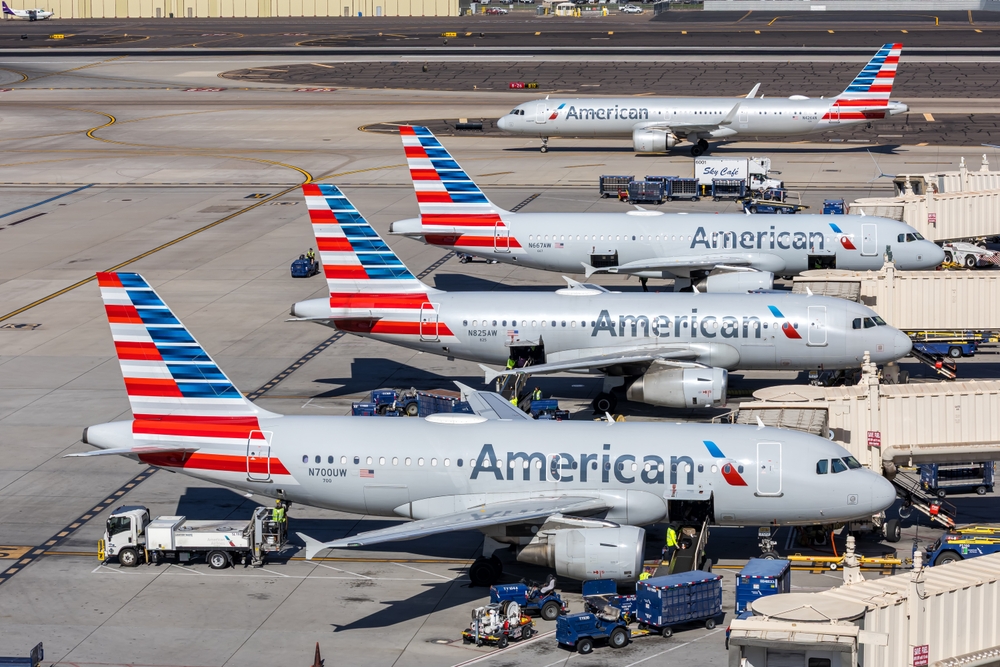
American Airlines came under pressure after firmly rejecting speculation about a possible merger with United Airlines, a scenario that had briefly fueled market excitement but quickly ran into the much harder realities of antitrust law and industry politics. The company moved to shut down the idea publicly, making clear that it is neither in talks with United nor interested in pursuing such a combination.
The reaction in the stock was immediate. Shares fell on Monday, giving back the gains they had enjoyed at the end of last week. That reversal showed how little confidence investors ultimately had that such a deal could move from rumor to reality once American’s position became explicit.
In practical terms, the market had to confront a simple fact: even if some executives find the industrial logic appealing, that does not mean the merger has a realistic path forward.
American Drew A Hard Line
The company’s statement left little room for interpretation. American did not merely decline to comment or offer a vague answer. It directly rejected the idea of merger discussions with United and went further by arguing that such a deal would be bad for competition and for consumers.
That second point matters as much as the first. By framing the issue in antitrust terms, American positioned itself not just as uninterested, but as actively skeptical of the merger’s legitimacy in the current regulatory and political environment.
The message was therefore broader than a denial. It was a signal that the airline sees the concept itself as problematic, not merely mistimed.
The Strategic Logic Is Easy To See
Even so, the idea did not come out of nowhere. A combination between American and United would create an airline of enormous scale and deepen the ability of the merged carrier to compete on key international routes. In a global market where major airlines increasingly fight for premium travelers and long-haul traffic, size remains a powerful asset.
That is the argument behind the merger talk. More breadth, more destinations and more network power could make a bigger airline more competitive in international markets where U.S. carriers face strong rivalry from foreign operators.
On paper, that logic has appeal. But in aviation, industrial logic is only one part of the story. Regulatory reality is often the part that matters most.
Antitrust Is The Central Obstacle
The reason the market remains deeply skeptical is straightforward: a merger of this scale would immediately trigger intense antitrust scrutiny. The largest U.S. airlines already control most domestic capacity, and combining two of the biggest players would raise obvious concerns about competition, fares and consumer choice.
That is why the proposal runs into such resistance. A combined American-United group would be viewed not just as another deal, but as a major consolidation of market power in an industry that already looks highly concentrated.
In that context, it is difficult to imagine regulators, consumer groups and political critics treating the transaction as anything other than a major test case in competition policy.
The Political Environment Is Not Clear-Cut
There have been signs that the current administration may be more open in tone to large corporate deals than some of its predecessors. That has helped keep merger speculation alive across sectors, including aviation. But openness to dealmaking in general does not mean support for every possible combination.
In fact, large airline mergers are uniquely sensitive because they directly affect pricing, routes, service levels and the structure of domestic travel. Even officials willing to entertain consolidation in principle may still draw the line at something that appears too dominant or too harmful to passengers over time.
That is the contradiction at the heart of the story. A government may like big deals in theory while still finding this particular one too difficult to defend.
The Stock Move Reflects That Reality
American’s drop on Monday suggests investors quickly adjusted to that logic. Once the company publicly rejected the idea, the speculative premium attached to the rumor evaporated. The market no longer had an easy reason to price in a transformational corporate event.
This kind of reversal is common when merger chatter briefly lifts a stock without enough substance behind it. The initial move reflects possibility. The later decline reflects probability. And in this case, the probability of a deal appears very low once the operational, political and regulatory barriers are taken seriously.
That is why the shares gave back ground so quickly. Excitement can move faster than credibility, but it rarely lasts once a company explicitly closes the door.
The Industry Is Still Under Pressure To Change
None of this means the airline sector is free from pressure to evolve. Rising fuel costs, shifting demand patterns and competition across domestic and international routes continue to force carriers to think hard about scale, efficiency and network strength. Some form of change in the industry may yet come.
But American’s response makes clear that this specific route is not one it wants to take. The company is effectively saying that even if the broader marketplace is changing, a merger with United is not the answer it is prepared to support.
That leaves the market with a clearer conclusion than it had a few days ago. The merger rumor may have been exciting, but excitement alone does not create a viable transaction. For now, the idea remains exactly what American says it is not pursuing: a headline, not a deal.