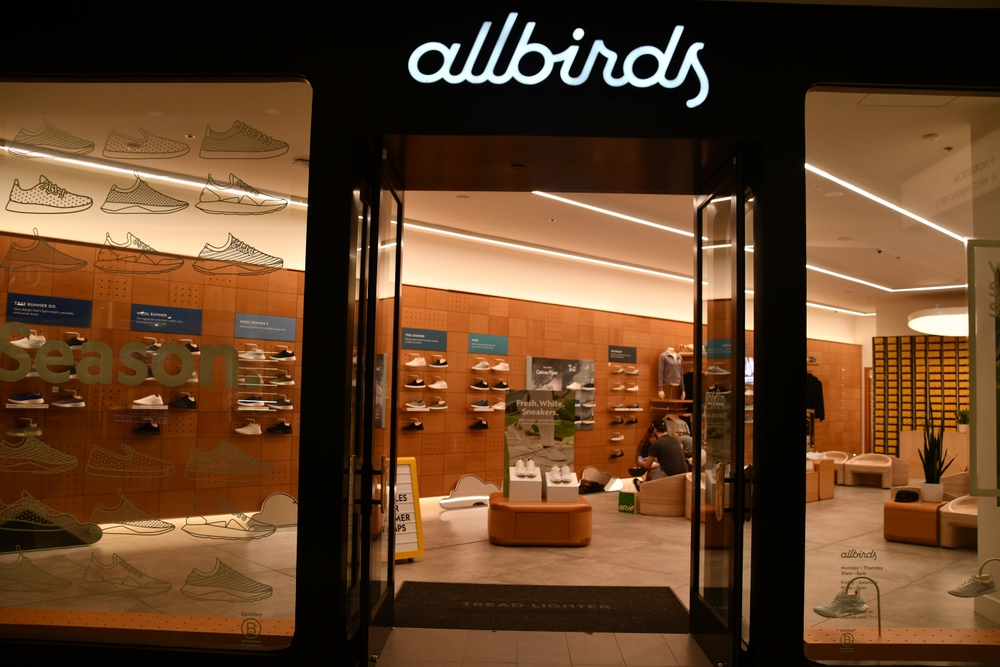
Allbirds has made one of the most dramatic strategic turns seen on the market in some time, announcing that it is shifting away from footwear and toward artificial intelligence infrastructure. The move stunned investors and sent the stock soaring, transforming a struggling former consumer brand into the latest company trying to tap into Wall Street’s intense appetite for anything tied to AI.
The reaction was explosive. Shares surged by more than 500% after the announcement, an extraordinary jump for a company that had been reduced to a tiny market value after years of declining sales and fading relevance. What was once a high-profile consumer brand known for minimalist, sustainability-focused shoes is now trying to reinvent itself as a player in a capital-intensive and highly competitive corner of the technology market.
That makes this much more than a normal restructuring. It is a full identity shift, and one that raises immediate questions about credibility, execution and whether this is a genuine transformation or simply a desperate attempt to ride the hottest theme in the market.
From Consumer Brand To Ai Infrastructure Story
According to the company’s announcement, Allbirds plans to become NewBird AI and move into AI compute infrastructure. The stated strategy is to acquire high-performance, low-latency computing hardware and lease access to customers under long-term arrangements.
In theory, the logic is easy to understand. Demand for AI computing capacity remains strong, and many companies still struggle to secure enough hardware quickly or reliably through traditional channels. If NewBird AI can acquire scarce infrastructure and place it under long-term contracts, it could participate in one of the fastest-growing parts of the market.
But theory is one thing and execution is another. AI infrastructure is not an easy business to enter. It requires deep capital, technical expertise and strong customer relationships, none of which naturally connect to a shoe company’s former operating model.
The Stock Market Loved The Idea Instantly
Investors responded as though the company had just discovered a new life after years of decline. The stock’s extraordinary rise reflected the market’s willingness to reward even the possibility of an AI-linked turnaround, especially when attached to a company that had already fallen so far from its former standing.
This kind of reaction is not new. Markets have long shown a tendency to reprice troubled businesses dramatically when they pivot toward the fashionable industry of the moment. In that sense, the Allbirds move fits a pattern investors have seen before: a company in a fading or troubled sector rebrands itself around a faster-growing theme in the hope of capturing new enthusiasm.
The danger, of course, is that stock excitement arrives far faster than business credibility. A soaring share price does not prove the pivot will work. It only proves that investors are willing to speculate on the possibility.
The Original Allbirds Story Had Already Broken Down
The sheer extremity of the pivot says a great deal about how badly the old business had deteriorated. Allbirds was once one of the most talked-about consumer brands in the market, praised for its sustainability message, natural materials and appeal among a certain affluent, tech-friendly customer base.
For a period, that formula worked brilliantly. The company grew quickly, attracted strong investor attention and reached a valuation above $4 billion. But the momentum did not last. Trends shifted, rivals crowded into the space, expansion became more costly and the brand lost much of the freshness that had helped define it early on.
Sales fell sharply over the following years, and the company’s decline became severe enough that its market value eventually shrank to a tiny fraction of its former peak. In that light, the AI pivot looks less like bold reinvention and more like an admission that the original growth story had effectively run out of road.
The Footwear Brand Is Not Completely Disappearing
Even so, the Allbirds consumer brand is not vanishing overnight. The company had already reached a deal to sell its intellectual property and other assets to American Exchange Group, which plans to continue selling products under the Allbirds name.
That means the old brand may survive in the market even as the listed company behind it transforms into something entirely different. It is an unusual arrangement, but one that highlights the depth of the shift. The consumer business is effectively being separated from the public shell, which is now trying to build a future around AI compute instead.
In practical terms, investors are no longer being asked to believe in a sneaker comeback. They are being asked to believe that the public company can reinvent itself in a completely unrelated industry.
The Opportunity Is Real, But The Bar Is Very High
No one doubts that AI infrastructure can be lucrative. The global boom in computing demand has already created enormous winners, and companies supplying the hardware layer of the AI economy have benefited from powerful structural tailwinds. That is the dream NewBird AI is now trying to attach itself to.
But this is also one of the most demanding areas in technology. It requires major funding, constant access to cutting-edge hardware and the operational ability to compete in a market dominated by specialist players and giant technology firms. A fresh funding deal may help provide initial resources, but it does not remove the scale of the challenge ahead.
The company is therefore attempting one of the hardest transitions imaginable: moving from a weakened lifestyle brand into a highly technical, capital-hungry business where credibility must be earned almost from scratch.
Wall Street’s Excitement Does Not Settle The Real Question
The market has clearly rewarded the story for now. But the bigger question is not whether investors like the idea in the short term. It is whether this new identity can become a real operating business rather than just a speculative narrative wrapped in AI language.
That question will matter more as the initial excitement fades. At some point, NewBird AI will have to show real assets, real customers and a real ability to compete in a market where hype can lift a stock but cannot build a durable company on its own.
For now, Allbirds has achieved something dramatic: it has gone from a struggling shoe company to one of the market’s most extreme AI pivot stories almost overnight. Whether that becomes a genuine turnaround or just another example of trend-chasing will depend on what comes after the surge.