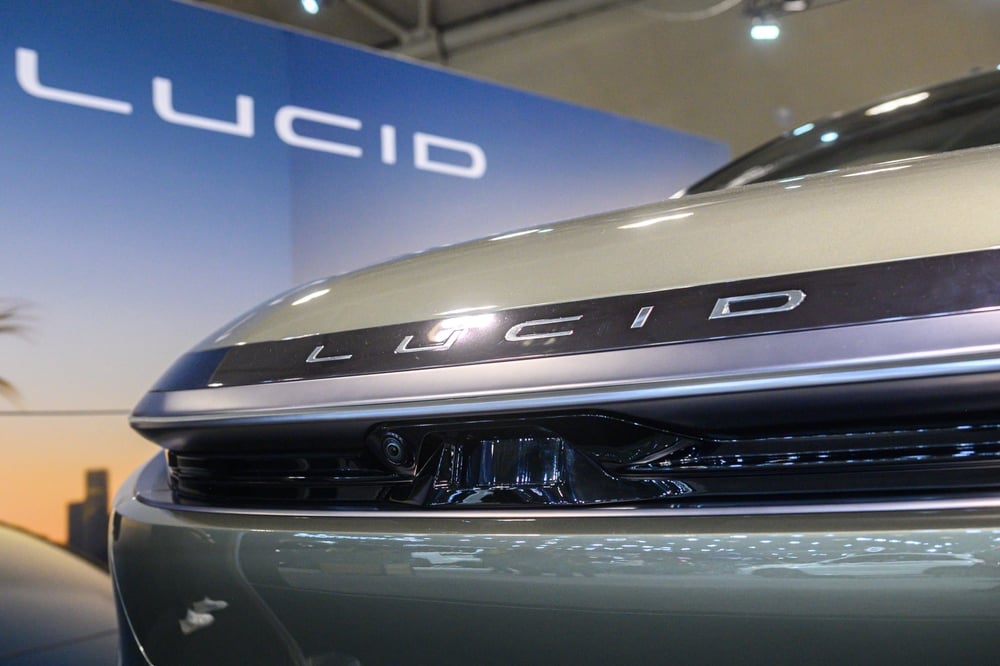
Lucid Group told investors it expects to reach positive cash flow later this decade, leaning on a broader vehicle lineup, a bigger push into software subscriptions, and longer-term plans that include robotaxis. The update came during Lucid’s first investor day in nearly five years as a public company, as the EV sector faces weaker demand and a tougher policy backdrop.
Markets were not convinced on the day. Lucid shares closed at $9.84, down 7.9%, after trading lower for much of the event despite the company offering its most detailed roadmap to date.
Why the Timeline Matters
Lucid’s target is ambitious relative to where the business stands today. In 2025, the company posted a loss of $2.7 billion on revenue of $1.35 billion. Its negative free cash flow was $3.8 billion, about 31% worse than the prior year.
Interim CEO Marc Winterhoff framed profitability as the company’s “north star” but did not provide a specific year for turning cash flow positive. Lucid is also navigating a shift from its largest shareholder, Saudi Arabia’s Public Investment Fund, which has moved from straight capital support toward a revolving credit approach.
Software and Robotaxis as a Second Revenue Engine
Lucid expects roughly $1 billion in annual incremental non-vehicle revenue later this decade, driven by services and recurring software subscriptions. Executives outlined a subscription product expected by early 2027, priced from $69 to $199 per month depending on capability.
The company also previewed a two-seat robotaxi concept and said robotaxis are a “mid-term” goal, without a firm launch date. Lucid’s head of advanced driving systems, Kay Stepper, said the company plans vehicles that can drive themselves under certain circumstances by 2029.
Lucid also said it will deepen an existing partnership with Uber on robotaxis, expanding the tie-up to include future midsize vehicles. Winterhoff suggested Lucid’s autonomy stack could approach parity with Tesla’s FSD as soon as next year, positioning autonomy as central to the company’s long-term identity.
Midsize Vehicles: The Real Scale Test
Lucid confirmed it plans three midsize vehicles. The first, called Cosmos, is targeted for launch this year, followed by Earth about a year later, and a third model on an unspecified timeline.
The midsize push is meant to move Lucid from a niche luxury footprint to a much broader market. Executives said this expansion could lift Lucid’s total addressable market from about $40 billion today to $700 billion as it adds volume segments and autonomy-led use cases.
Lucid reiterated that the midsize lineup is expected to start around $50,000, aligning closer to mainstream transaction prices. It also sets up a direct comparison with Rivian’s upcoming R2, expected to begin with a roughly $58,000 launch edition. Lucid argues its midsize platform will be class-leading on efficiency, a core differentiator it has emphasized across its lineup.
Liquidity and the Runway Question
Lucid said it has about $5.5 billion in total liquidity, including a roughly $2 billion delayed-draw term loan facility tied to Saudi’s PIF, and believes that is sufficient through the first half of 2027.
Still, the strategy depends on execution in a difficult EV market. Analysts noted headwinds such as tariffs and shifting policy, and investors appear to be waiting for proof that Lucid can convert product plans and autonomy ambitions into durable demand and improving cash dynamics.