A wide-ranging conversation at Davos
Speaking at the World Economic Forum, Elon Musk shared a broad vision of the future during a public conversation with BlackRock CEO Larry Fink. The discussion moved fluidly across robotics, artificial intelligence, space exploration and energy, reflecting the interconnected nature of Musk’s work across multiple industries.
Fink opened by asking what unifies Musk’s projects from an engineering perspective. Musk’s response quickly shifted to a philosophical plane, focusing on the rarity of life and the responsibility of preserving human consciousness.
Why making life multiplanetary matters
Musk argued that consciousness is exceptionally rare in the universe and therefore fragile. From his perspective, expanding human presence beyond Earth is not a luxury but a safeguard. Making humanity a multiplanetary species reduces the risk of extinction from planetary-scale events.
He emphasized the importance of fully reusable space systems, noting that true reusability could reduce the cost of space access by a factor of one hundred. He compared current spaceflight economics to single-use aircraft, an approach he considers fundamentally inefficient.
Robots, AI and an abundant economy
Looking ahead, Musk described a future in which humanoid robots become commonplace. He believes robotics and artificial intelligence will advance rapidly, eventually making physical labor widely automated.
In that scenario, Musk sees the potential for an economy of abundance, where poverty could be eliminated and living standards rise universally. He also suggested that breakthroughs in biotechnology could eventually make age-related decline reversible.
Energy as the foundation of progress
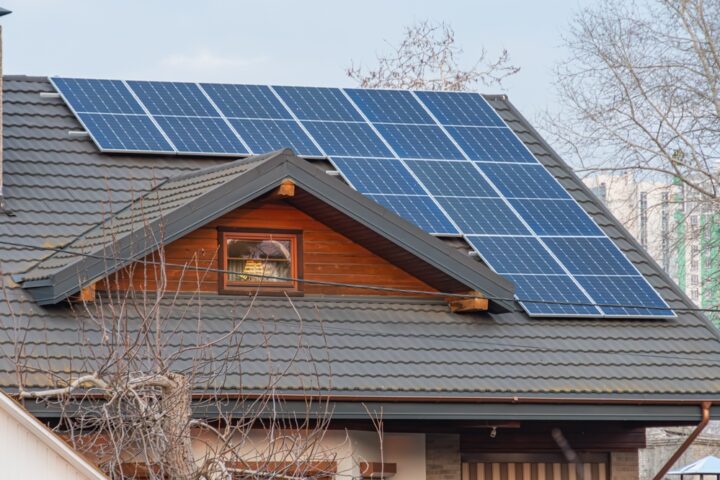
Energy, Musk stressed, is the limiting factor behind nearly all technological progress. He noted that renewable energy capacity, particularly solar, is expanding rapidly, with China currently leading deployment.
According to Musk, the amount of land required to power large economies with solar energy is far smaller than commonly assumed. He described solar power as the fundamental energy source and outlined plans to deploy solar-powered satellites, which could harvest energy far more efficiently in space.
Autonomous driving and artificial intelligence
On self-driving technology, Musk was unequivocal, describing it as a solved engineering problem. He expects deployment and scaling, rather than capability, to be the remaining challenges.
Regarding artificial intelligence, Musk predicted that by the end of the decade AI systems could surpass the combined intellectual capacity of humanity. He even floated the idea of space-based, solar-powered data centers, citing superior cooling efficiency and lower operating costs.
Choosing optimism about the future
Musk closed the conversation on a personal note, crediting science fiction as a major source of inspiration throughout his life. He encouraged a forward-looking mindset, arguing that optimism is not only emotionally healthier but also more productive.
“It’s better for your quality of life to be an optimist and wrong,” he said, “than a pessimist and right.”