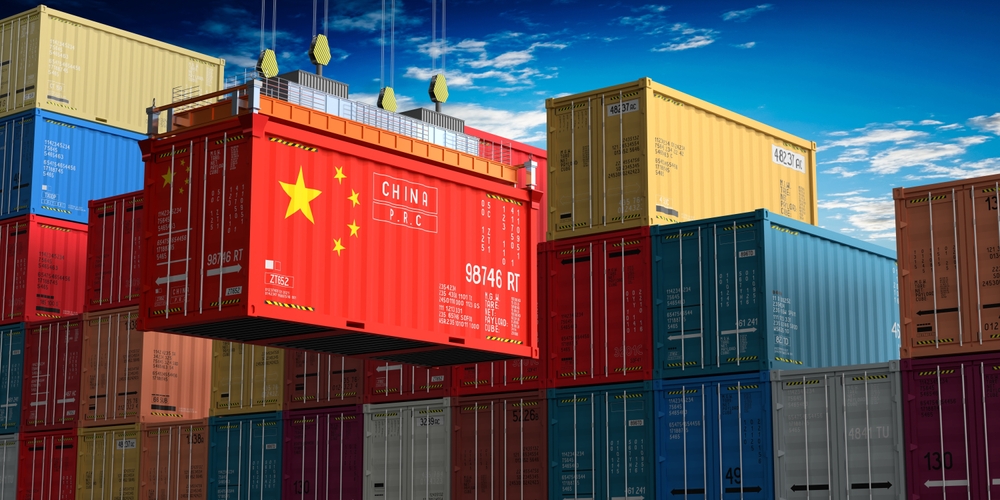
September sees strong export and import gains
China’s export growth accelerated in September despite an unresolved trade deal with the United States. Exports climbed 8.3% year-over-year, surpassing the 6.0% forecast and improving from 4.4% in August. Imports also surged, rising 7.4% compared to a modest 1.3% gain the previous month.
The world’s second-largest economy is showing resilience by diversifying its export destinations beyond the U.S. While American demand remains significant — once absorbing over $400 billion in Chinese goods annually — manufacturers are shifting focus toward markets in Asia, Africa, and Latin America to counteract tariff restrictions and maintain momentum toward China’s 5% annual growth target.
Geopolitical friction intensifies
Tensions between Washington and Beijing remain high as the 90-day tariff truce, which began August 11, nears its expiration in early November. Hopes for progress during a potential meeting between President Donald Trump and President Xi Jinping later this month are uncertain.
Last week, China escalated pressure by expanding export controls on rare earth elements and tightening oversight on semiconductor users, raising concerns over future supply disruptions for U.S. and European industries. These moves appear aimed at increasing leverage ahead of negotiations.
Meanwhile, technical discussions between U.S. and Chinese officials continue following the Madrid summit, which led to a temporary breakthrough on TikTok. However, a broader trade resolution remains elusive.
Diversification strategy shows results
China is reaping early rewards from its strategy to expand trade ties beyond the West. Exports to India reached an all-time high in August, while shipments to Africa and Southeast Asia are on track to set annual records. Still, China’s trade surplus narrowed to $90.45 billion in September, falling short of the $98.96 billion forecast and down from $102.33 billion the previous month.
Domestic demand continues to lag, as seen in South Korean export data showing only a 0.5% rise in shipments to China — a key early indicator of Chinese import strength.
Economic support and outlook
At the end of September, China’s state planner announced a 500 million yuan ($70.15 million) stimulus initiative through policy-based financial tools to support investment projects. While the measure came too late to influence September data, it signals Beijing’s readiness to intervene if necessary to stabilize growth.
Recent indicators, including August retail sales and factory output, suggest the economy remains under pressure. Analysts are watching closely for additional stimulus measures or a breakthrough in U.S.-China trade negotiations.